Inside the Studio
A Day in the Life of Mira Petkova's Workshop
Light, repetition, and carefully timed pauses shape a working day in Mira Petkova's Sofia studio.
By Sophie Harrow
· 5 min read

Mira Petkova begins most working days by opening the windows, checking the humidity, and moving yesterday’s clay pieces into the light. The ritual is practical rather than romantic. Paper clay, paint, fabric, and adhesive all respond to the room. A head that feels dry on the surface may still need hours before it can be sanded safely.
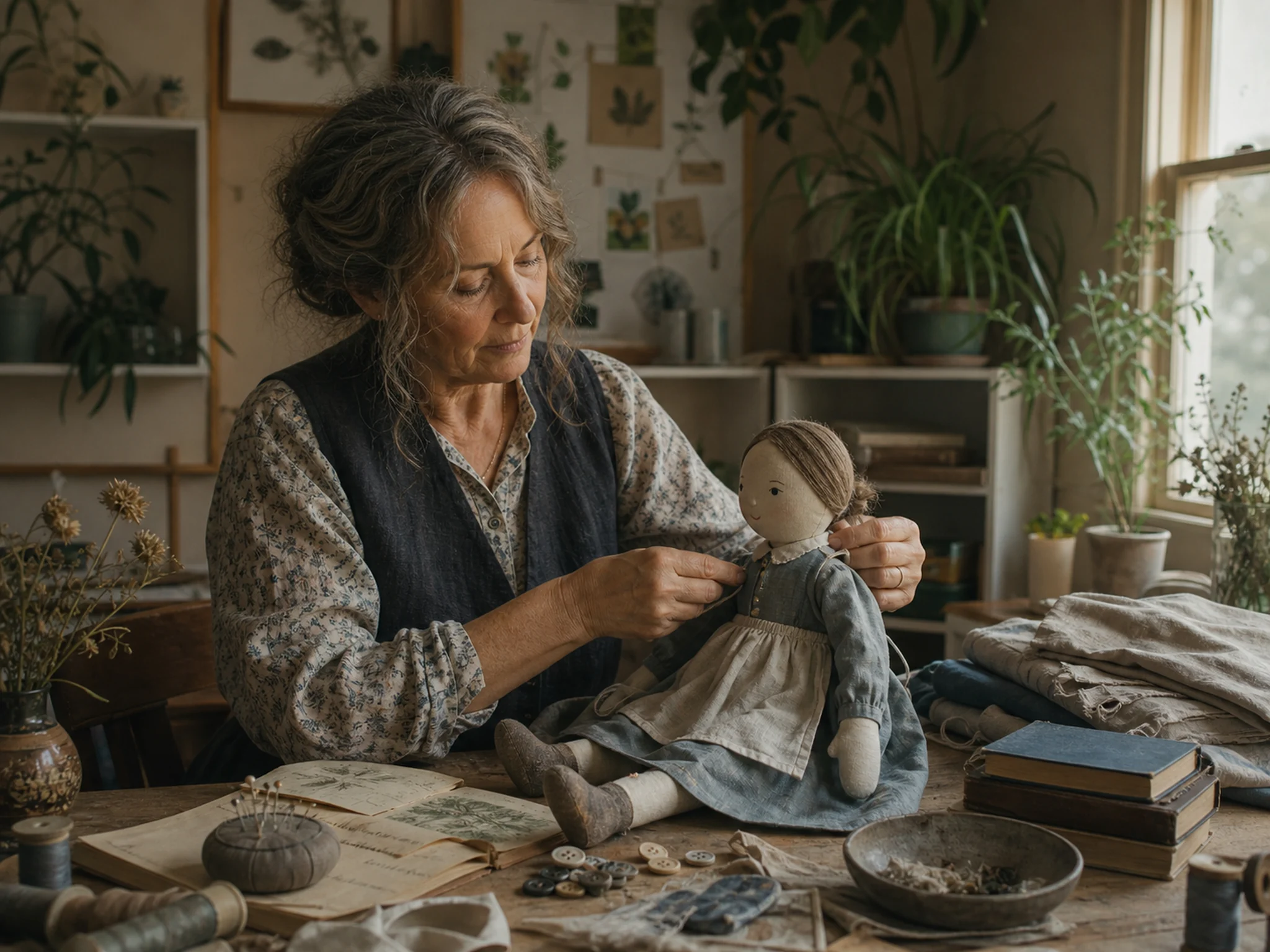
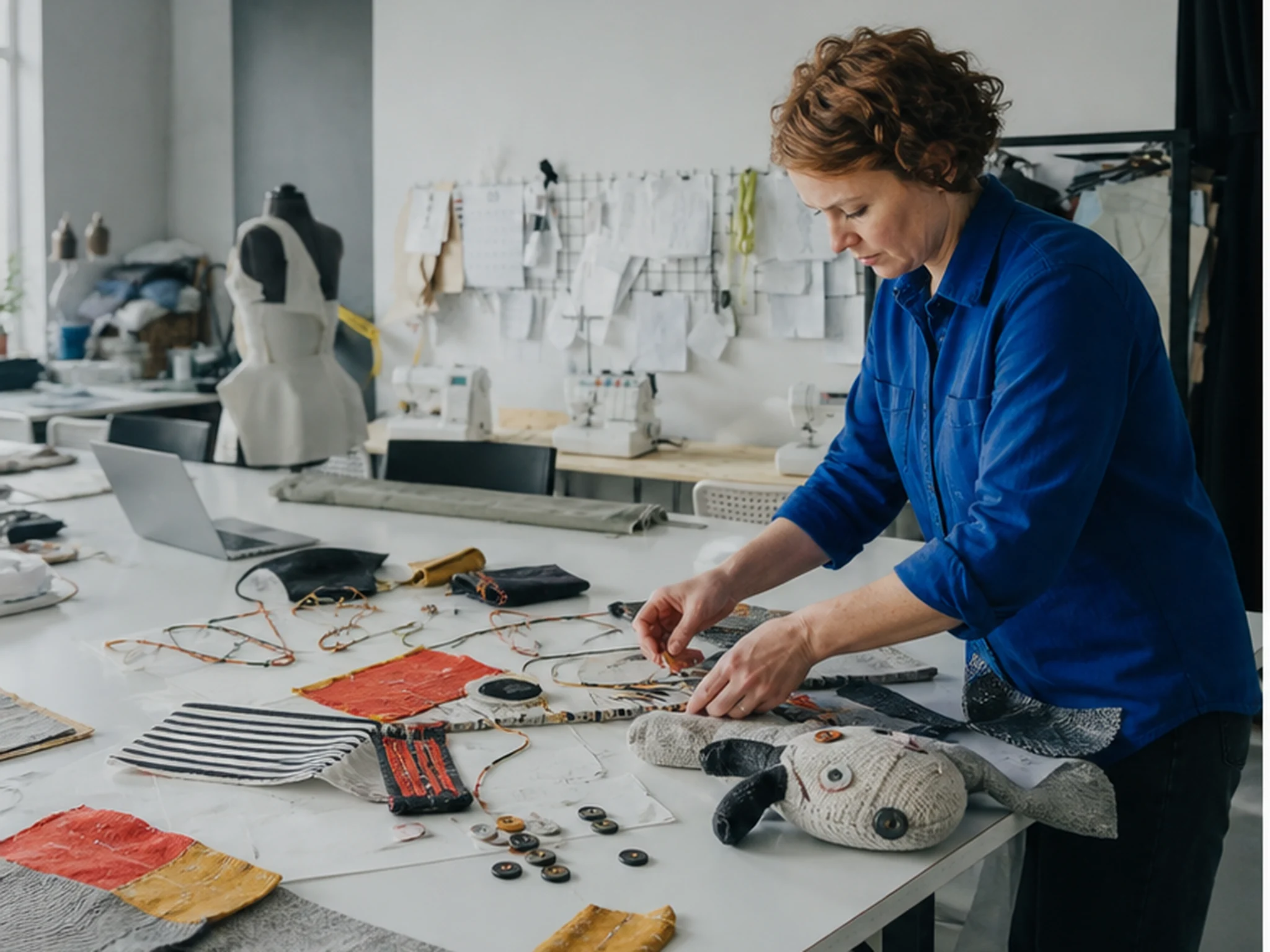
Her workshop occupies one room of an apartment in Sofia. The central table is divided into zones: clay and sanding at one end, fabric and pattern work at the other. A narrow shelf holds labeled boxes for eyes, thread, fasteners, unfinished hands, and rejected tests. The rejects stay visible. They remind her which mixtures cracked, which neck joints loosened, and which painted expressions became too controlled.
8:30 — review before making
The first half hour is for looking rather than producing. Petkova compares the current pieces with sketches and photographs from the previous day. Because the work changes as it dries, a decision that seemed balanced at night can feel different in morning light.
She keeps a simple production card for each figure: working title, measurements, materials, start date, drying stages, paint layers, garment notes, and repairs. This is useful for collectors later, but it also helps the artist reproduce a technique without pretending that a one-of-a-kind object can be repeated exactly.
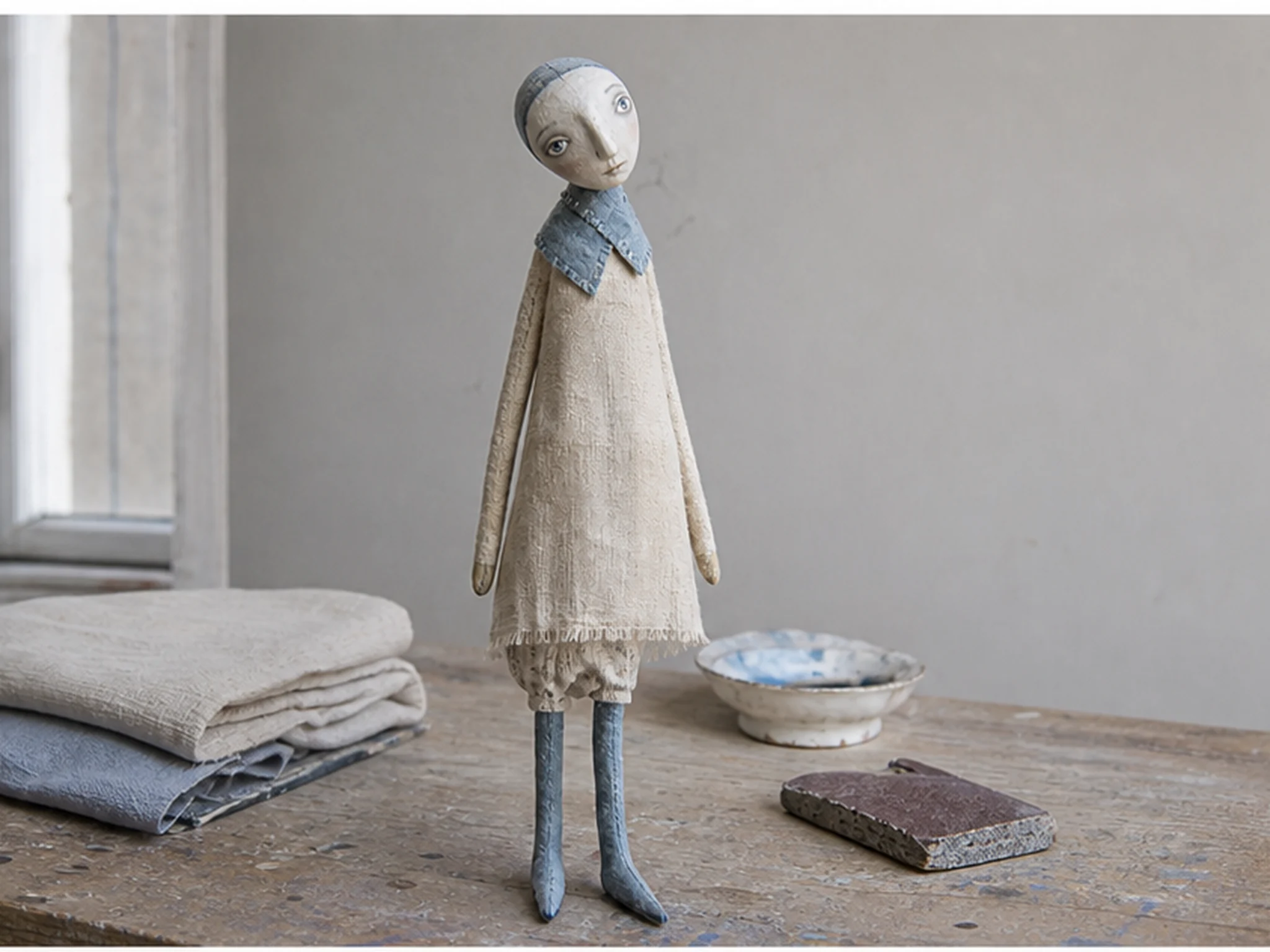
The head is usually made first. A small core reduces weight, and thin layers of paper clay are added gradually. The features are deliberately shallow. Deeply modeled mouths and eyelids can dominate a small face; Petkova prefers to let paint and shadow do part of the work.
“A small face becomes loud very quickly. I stop before it feels finished and return when I can see it as an object again.” — Mira Petkova
10:00 — sanding and surface
Dry heads are sanded with progressively finer abrasives. This is one of the least photogenic and most important stages. High points are softened, seams are reduced, and the neck opening is tested against the body pattern.
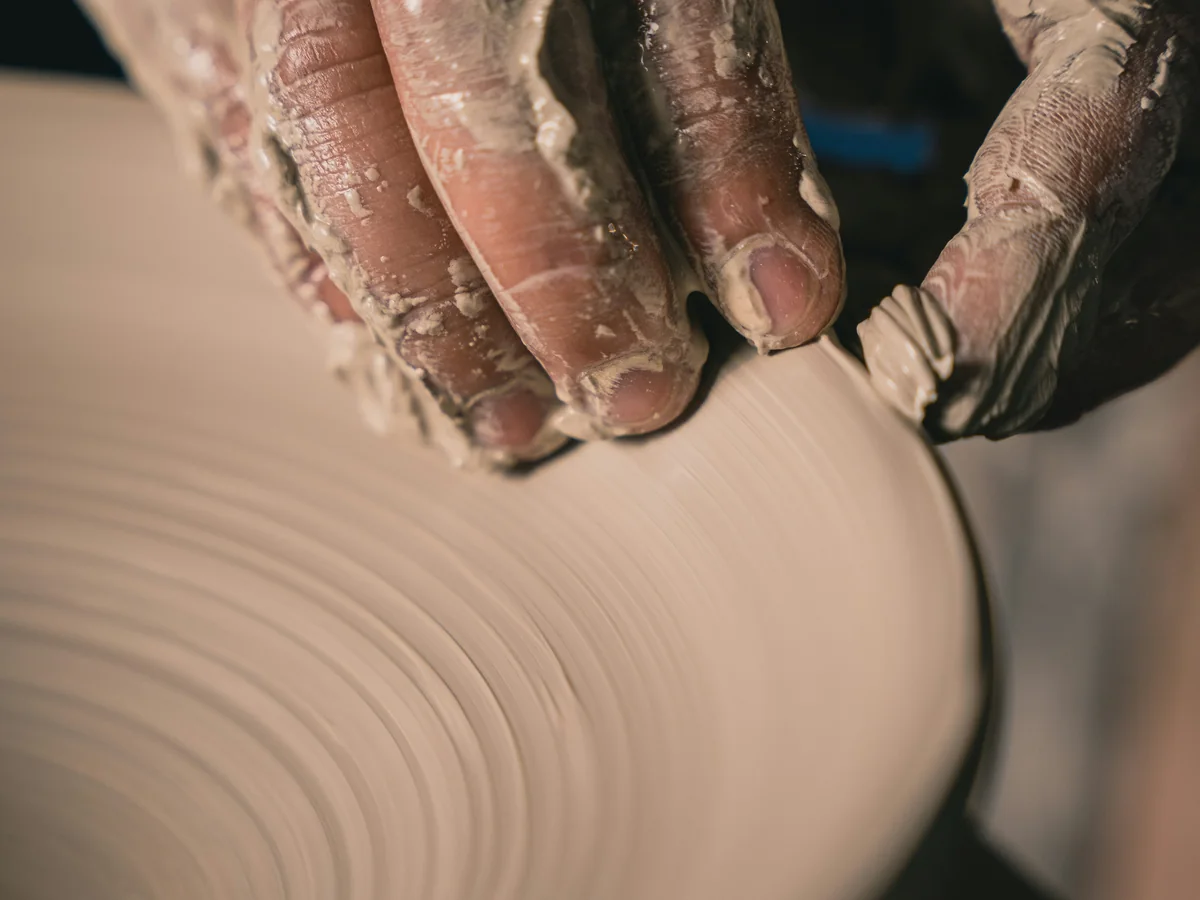
Paper clay and ceramic clay are not interchangeable. Ceramic work is shaped, dried, fired, and often glazed, while air-drying or paper-based clays follow different curing and finishing processes. The site should avoid collapsing all clay dolls into one category. Each artwork page needs a precise materials field because care, weight, fragility, and surface behavior depend on the actual medium.
After sanding, Petkova seals the surface lightly and tests paint on a separate sample. She builds color in thin layers: a warm ground, muted cheek color, shadow around the eyes, and tiny adjustments to the mouth. The paint should integrate with the sculpted form rather than sit on top as a separate illustration.
12:30 — bodies and joints
The body pattern is cut from tightly woven linen or cotton. Areas around the neck and limbs receive reinforcement, but the seams are kept narrow to avoid bulk. Wool filling is added in small amounts so the body remains firm enough to support the head without becoming rigid.
Natural-fiber doll making commonly uses wool batting, strong thread, doll-skin fabrics, long needles, and felting tools. Petkova’s process borrows from that practical vocabulary while adding a sculpted head and internal support. The mixed-media construction is useful because each material does what it does best: clay carries subtle facial form, while cloth creates a quieter, more forgiving body.
15:00 — clothing as structure
Petkova does not treat clothing as a final decorative layer. A garment can stabilize the torso, conceal a joint, alter the center of gravity, or prevent the arms from drifting outward. The pattern is therefore fitted on the finished body rather than scaled from a generic template.
The palette stays narrow: chalky blue, washed brown, warm gray, faded green. Some fabric is tea-dyed or repeatedly rinsed, but the process is tested first because dyes and additives can migrate or change over time. Aesthetic aging methods should be tested carefully and kept separate from long-term conservation guidance for storage.
Small details are added last. A collar may be attached with visible hand stitches. A wooden bead becomes a button. A narrow strip of worn cotton is turned into a belt. Nothing is glued until the pose and garment tension have been checked from every side.
17:30 — editing, photography, and records
The last stage is not immediately packing the piece for sale. Petkova photographs it against a neutral background, then again in a simple interior. The neutral images document color, condition, and construction. The contextual images communicate scale and atmosphere.
She records the final dimensions and weight, lists every material she can identify, and writes a short care note. If an accessory is removable, the documentation shows how it attaches. If the figure needs a stand, the stand is treated as part of the work rather than an afterthought.
The finished piece is left in the studio overnight. The next morning she makes one final decision: whether the object needs another intervention or whether the urge to improve it is simply difficulty letting it leave.
A sustainable rhythm
A slow process is not automatically sustainable. Long hours, repeated hand strain, dust, and solvent exposure can sit behind an appealing studio image. Petkova’s schedule therefore includes ventilation, dust control, task rotation, and time limits. The point is not to romanticize exhaustion as craftsmanship.
The quiet character of the finished dolls comes from this structure: make, pause, inspect, document, and remove what does not help. The studio is not a magical place where objects appear. It is a system for making hundreds of small judgments visible in one form.