Materials
Art Doll Materials: Cloth, Felt, Clay, Wood, and Mixed Media
Material is not just a finish. It determines weight, gesture, fragility, aging, repair, and the kind of detail an artist can achieve.
By Mateo Ellis
· 5 min read
An art doll’s material is not merely a style label. It determines how the figure can be posed, how much detail it can hold, how it responds to light and humidity, how it should be packed, and what kinds of change are normal over time.
Museum collections nstrate how wide the material field can be. Dolls and related figures have been made from wood, wax, china, bisque, composition, plastics, wool cloth, felt, clay, hide, ribbon, thread, beads, paint, and many combinations of these. Contemporary artists add paper clay, polymer clay, resin, wire, reclaimed fabric, natural fibers, and found objects.
A useful product page should name the actual materials rather than relying only on “mixed media.” The following categories are a starting point.
Cloth and natural-fiber dolls
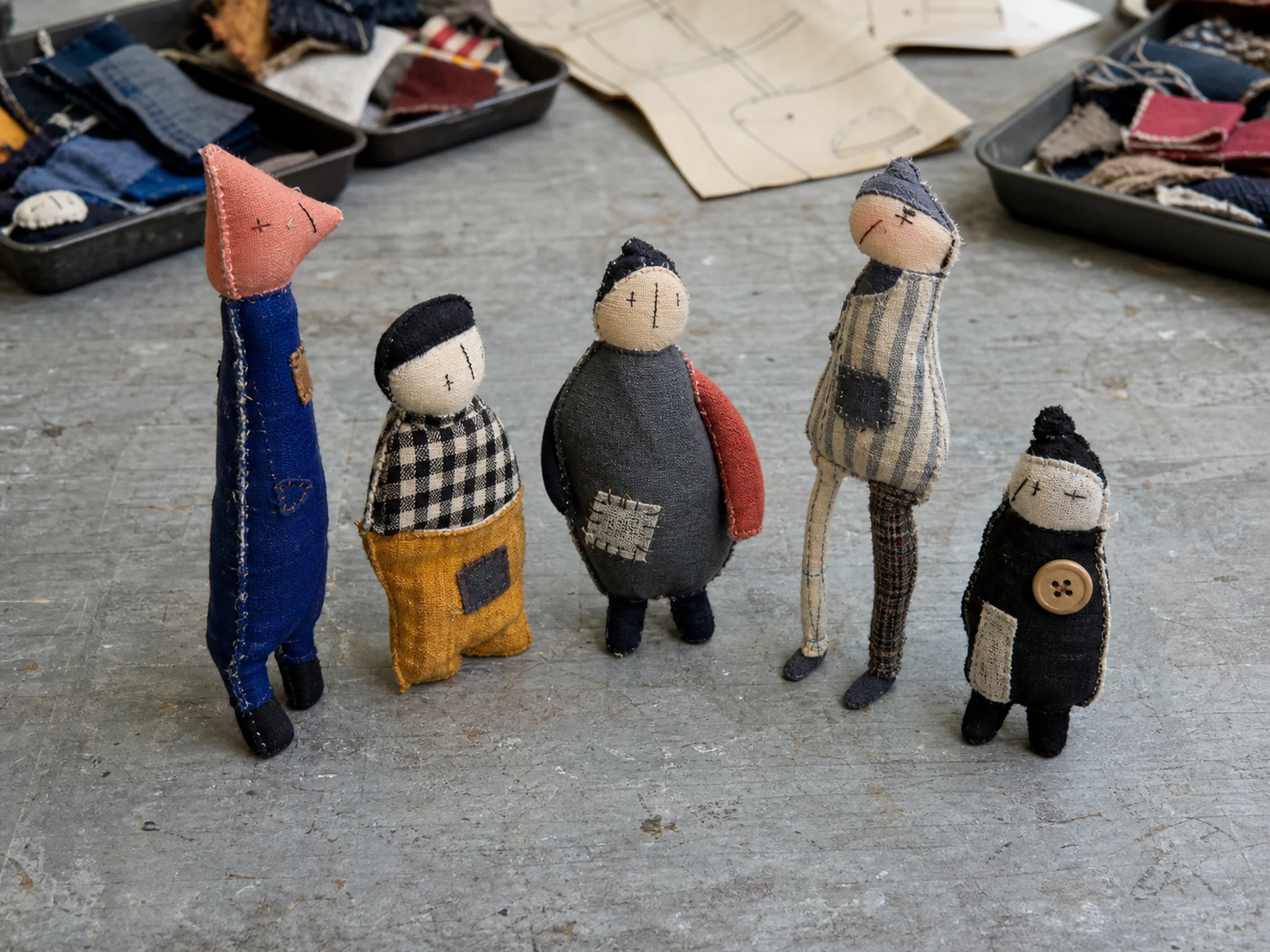
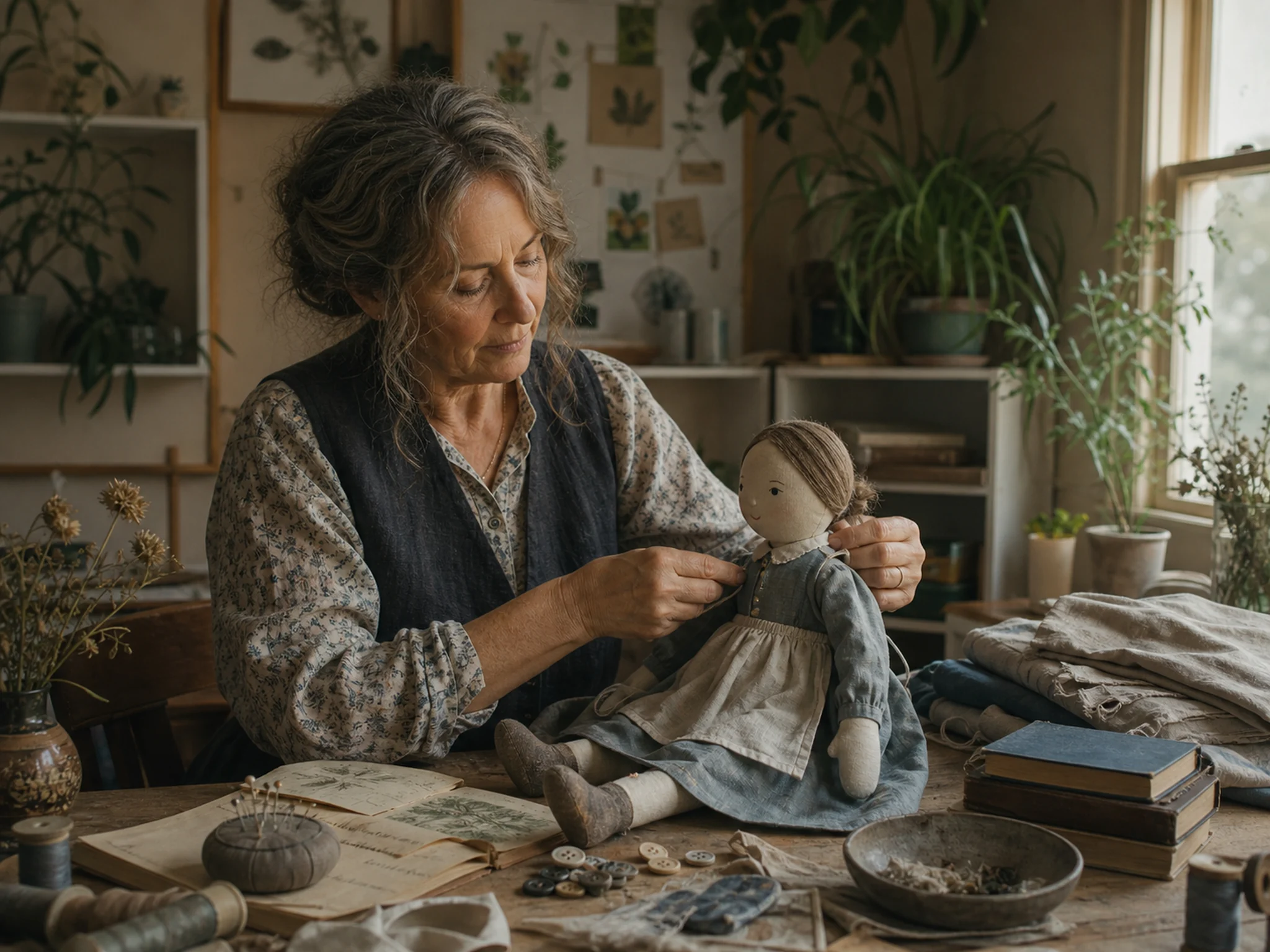
Cloth figures are built from woven or knitted fabric, usually with an internal filling. Natural-fiber doll makers may use wool batting, cotton jersey or interlock for skin, tubular gauze, strong sewing thread, long needles, and felting tools.
Strengths: light weight, expressive posture, tactile surface, clothing integration, and relatively low breakage risk.
Questions to ask: What is the filling? Is there internal wire? Are the joints stitched, buttoned, or fixed? Are surface colors painted, dyed, embroidered, or applied with pastel? Are small components securely attached?
Care: protect from dust, insects, strong light, moisture, and crushing. Do not wash unless the artist explicitly says the work is washable. Support the body during storage so stuffing and joints are not distorted.
Wool felt and needle-felted figures
Felt can be cut from sheets or built sculpturally by repeatedly working wool fibers with barbed needles. It can create both crisp graphic shapes and soft modeled volumes.
Strengths: low weight, seamless forms, rich color, and the ability to integrate surface and structure.
Questions to ask: Is the figure solid felt, felt over a core, or felt over wire? Are clothing and body separate? Is the wool naturally colored or dyed? Which elements are most vulnerable to snagging?
Care: avoid rubbing and aggressive brushing. Loose fibers should not be pulled. Keep the work away from moth risk and inspect storage areas regularly.
Air-dry clay, paper clay, and polymer clay
These materials are often grouped together, but their chemistry and curing methods differ. Air-dry and paper clays harden through drying; polymer clay cures with heat; artists may use sealers, paint, varnish, or embedded armatures.
Strengths: fine facial modeling, stable small forms, surface painting, and compatibility with textile bodies.
Questions to ask: What exact clay was used? Is it solid or built over a core? How was it cured? What paint and sealer are present? Is the neck or limb joint reinforced?
Care: protect from impact and avoid lifting by thin protrusions. Do not assume a sealed surface is waterproof. Sudden environmental changes and poor internal construction can contribute to cracking.
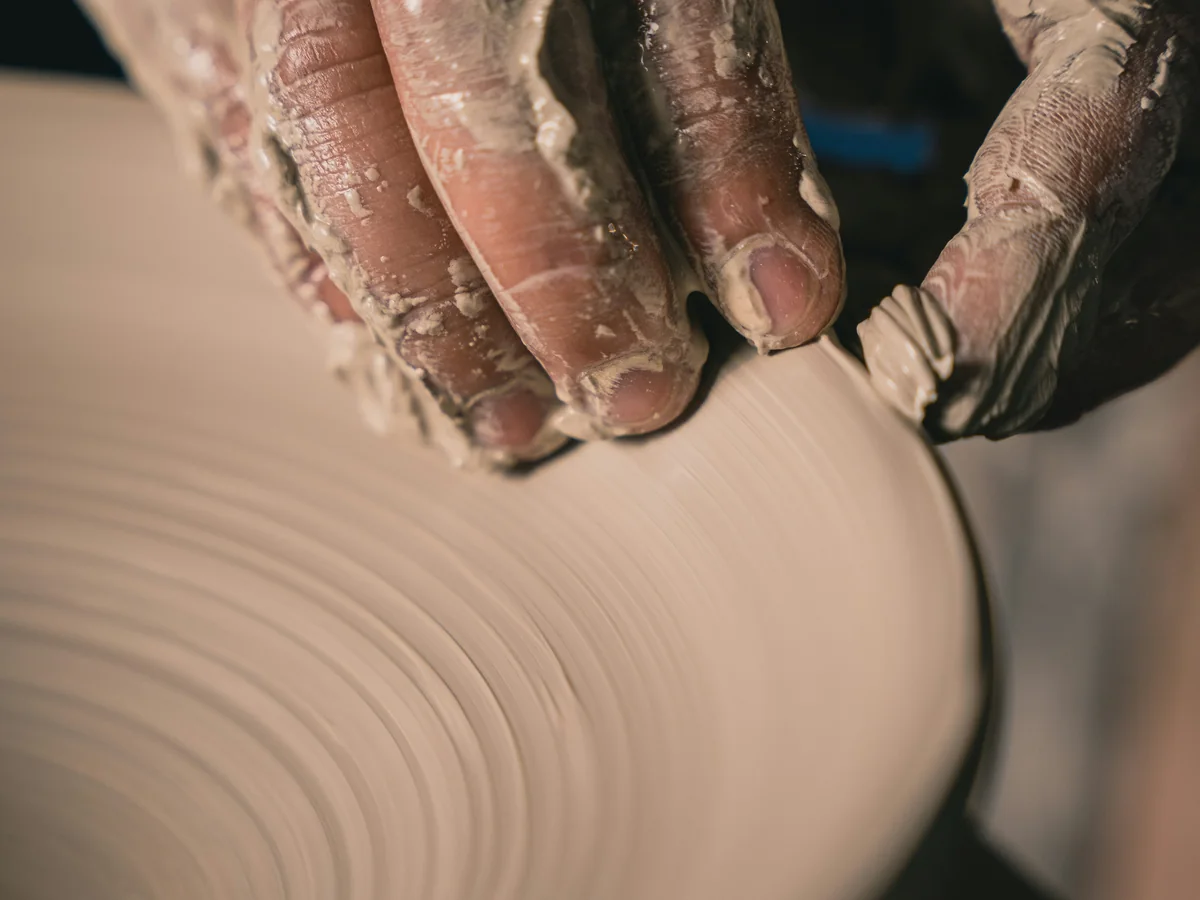
Ceramic and porcelain
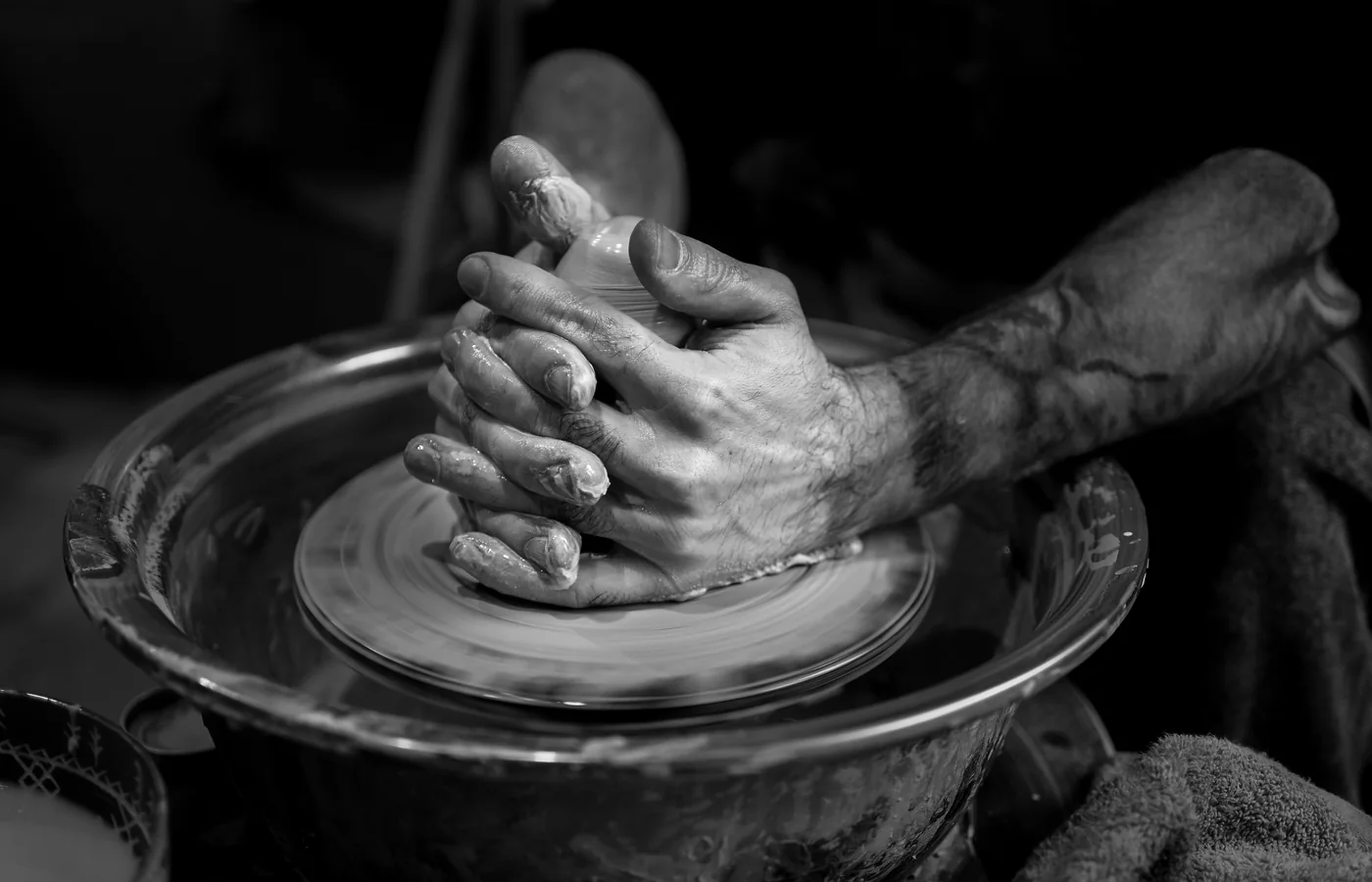
Ceramic figures are fired, sometimes more than once, and may be glazed, underglazed, painted, or combined with textile bodies. Porcelain and bisque have distinct visual and structural qualities.
Strengths: refined surface, durable fired body, high detail, and strong historical associations with collectible dolls.
Questions to ask: Is the work porcelain, stoneware, earthenware, or another ceramic body? Is it glazed? Are parts joined before or after firing? How are textile and ceramic components connected?
Care: assume high breakage risk. Provide stable support, keep pieces away from shelf edges, and retain custom packing. Never lift a figure by an attached textile limb if the weight is carried by a ceramic head or torso.
Wood
Wood may be carved as a complete figure, turned into simplified bodies, or used as an internal core for felt and textile work. Grain direction affects strength, especially in thin limbs and projecting details.
Strengths: structural clarity, warmth, visible tool marks, and compatibility with paint, wax, textiles, and joint systems.
Questions to ask: What species is the wood? Is it solid, laminated, or assembled? Which finish was used? Are there natural checks or active splits? How are joints secured?
Care: avoid extreme dryness, damp, and rapid environmental change. Do not apply household furniture polish. Support narrow limbs and accessories during transport.
Wire and internal armatures
Wire can make a soft figure poseable or support wings, fingers, ears, and tails. It also creates hidden stress points.
Strengths: gesture, balance, and fine projecting shapes.
Questions to ask: Is the figure intended to be repositioned repeatedly, posed once, or not moved at all? What type of wire is present? Can it corrode or migrate through the surface? Where should the collector hold the piece?
Care: do not repeatedly bend a wire armature unless the artist designed it for that use. Metal fatigue can occur invisibly before a break becomes obvious.
Mixed media and found objects
Mixed-media dolls can combine nearly every category above. Found objects may contribute history and visual specificity, but they can also introduce unknown coatings, corrosion, acidity, or structural weakness.
Strengths: broad expressive range and strong material storytelling.
Questions to ask: Request a full component list. Identify removable parts. Ask whether old materials were cleaned, sealed, or stabilized. Confirm which changes—rust, fading, tarnish, fraying—are expected and which indicate damage.
The listing should be as precise as the work
A high-quality artwork page should include:
- Primary structural materials.
- Surface materials and finishes.
- Internal supports, wire, weights, and fillings.
- Dimensions and weight.
- Moving or removable components.
- Display support requirements.
- Care and handling instructions.
- Known sensitivities or intentional aging.
Material knowledge does not make collecting clinical. It makes attention more exact. The closer we look at how an object is built, the more clearly we can see what the artist chose to make possible.