Interview
Celia Haines on Process, Play, and Leaving Room for Surprise
For Celia Haines, a pattern is not a command. It is a stable starting point from which color and material can misbehave.
By Sophie Harrow
· 4 min read
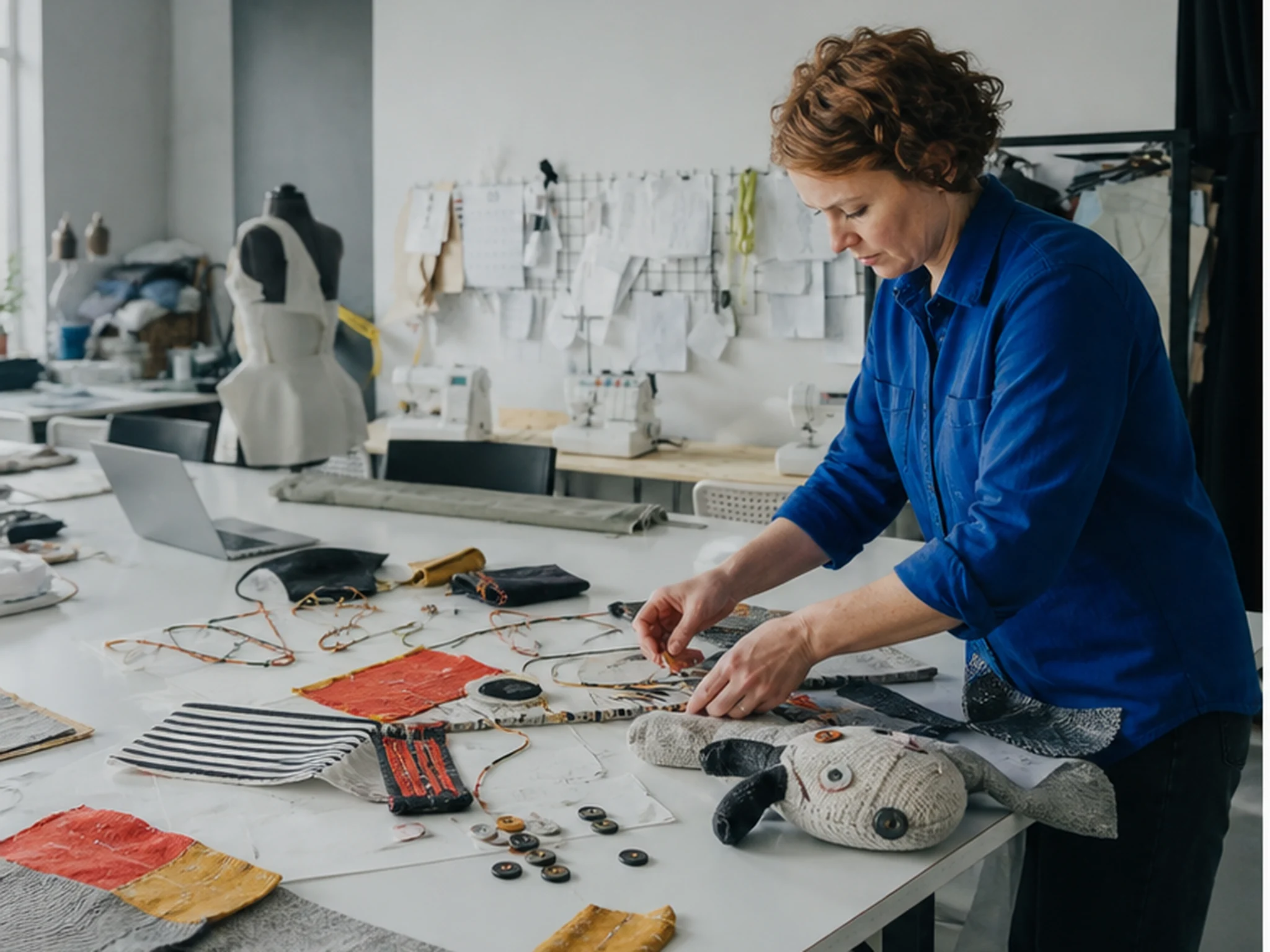
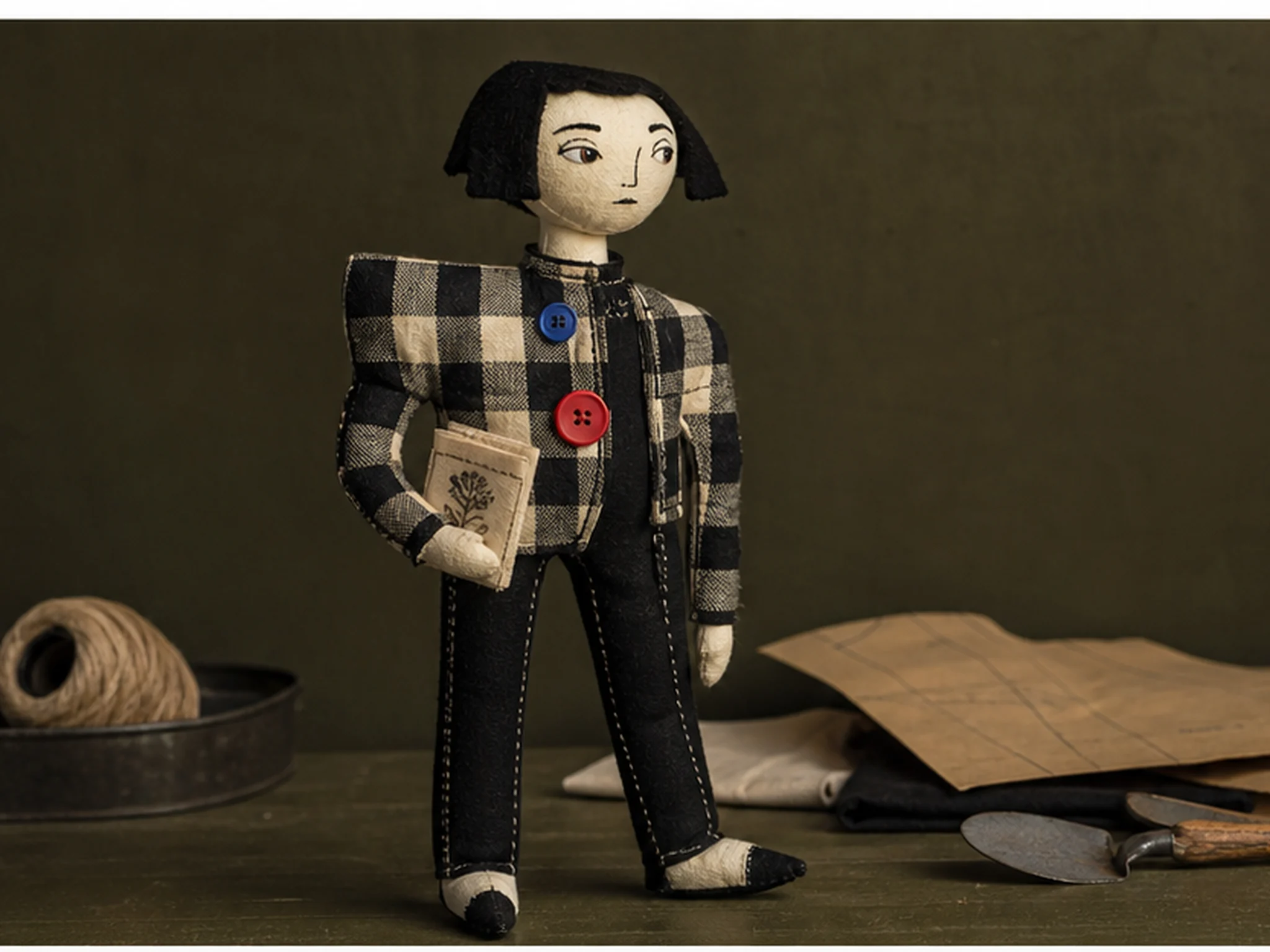
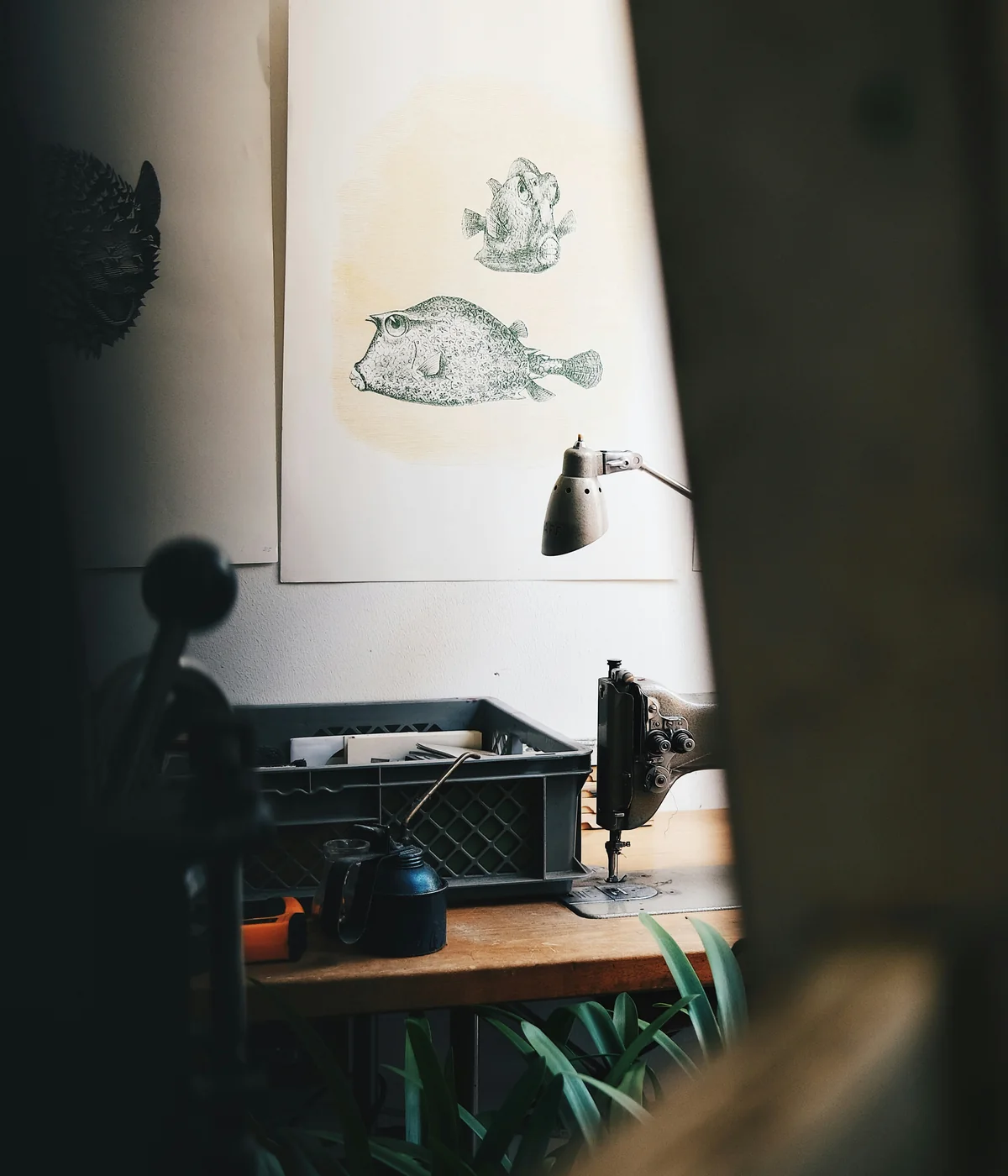
Celia Haines keeps patterns, but she does not believe in obeying them. In the Glasgow studio she calls Common Thread Room, a small set of paper shapes hangs above the cutting table: body, head, arm, foot, ear, coat. Those parts are repeated across the work, yet the finished figures rarely look related in an obvious way.
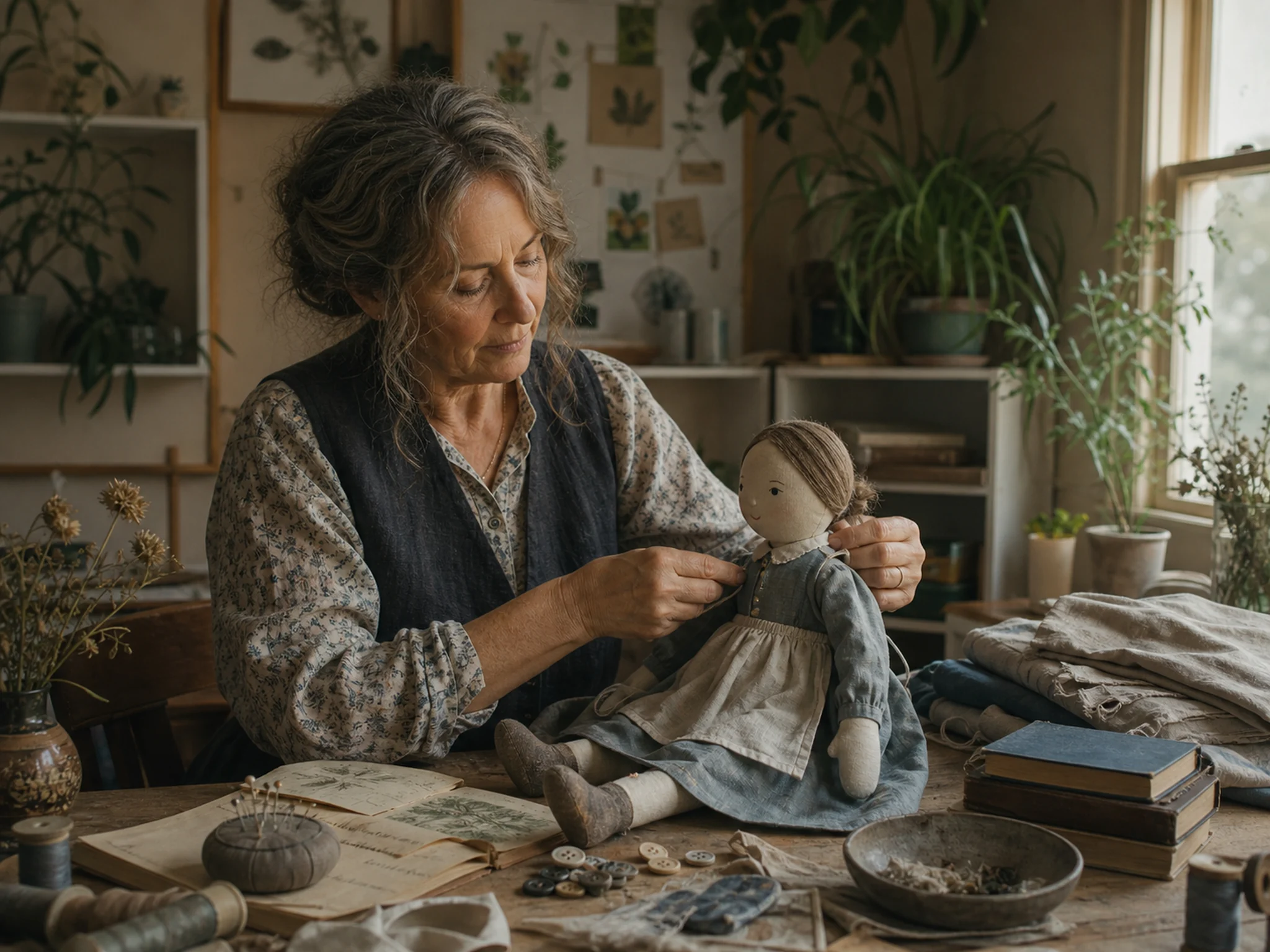
The variation comes from scraps. A stiff upholstery remnant produces a figure that stands upright. A loose knit creates a rounded, collapsing body. A striped sleeve changes the direction of the pose. Rather than forcing each fabric into a predetermined character, Haines allows material behavior to redirect the design.
The following interview is editorial content written to establish the site’s editorial voice.
Your work begins with reusable patterns. Where does play enter?
Celia Haines: The pattern removes the least interesting decisions. I do not need to reinvent an arm every morning. Once the basic scale is fixed, I can pay attention to the fabric. A pattern cut from dense felt behaves one way; the same shape in an old shirt behaves completely differently.
Play enters when I stop asking the material to imitate the sketch.
Do you draw characters first?
Very loosely. I draw relationships more than characters: tall beside short, a dark shape beside a bright one, a figure carrying something wider than its body. If I draw the face too early, I start trying to reproduce it, and the object becomes an illustration of an idea instead of a thing with its own logic.
What makes a scrap worth keeping?
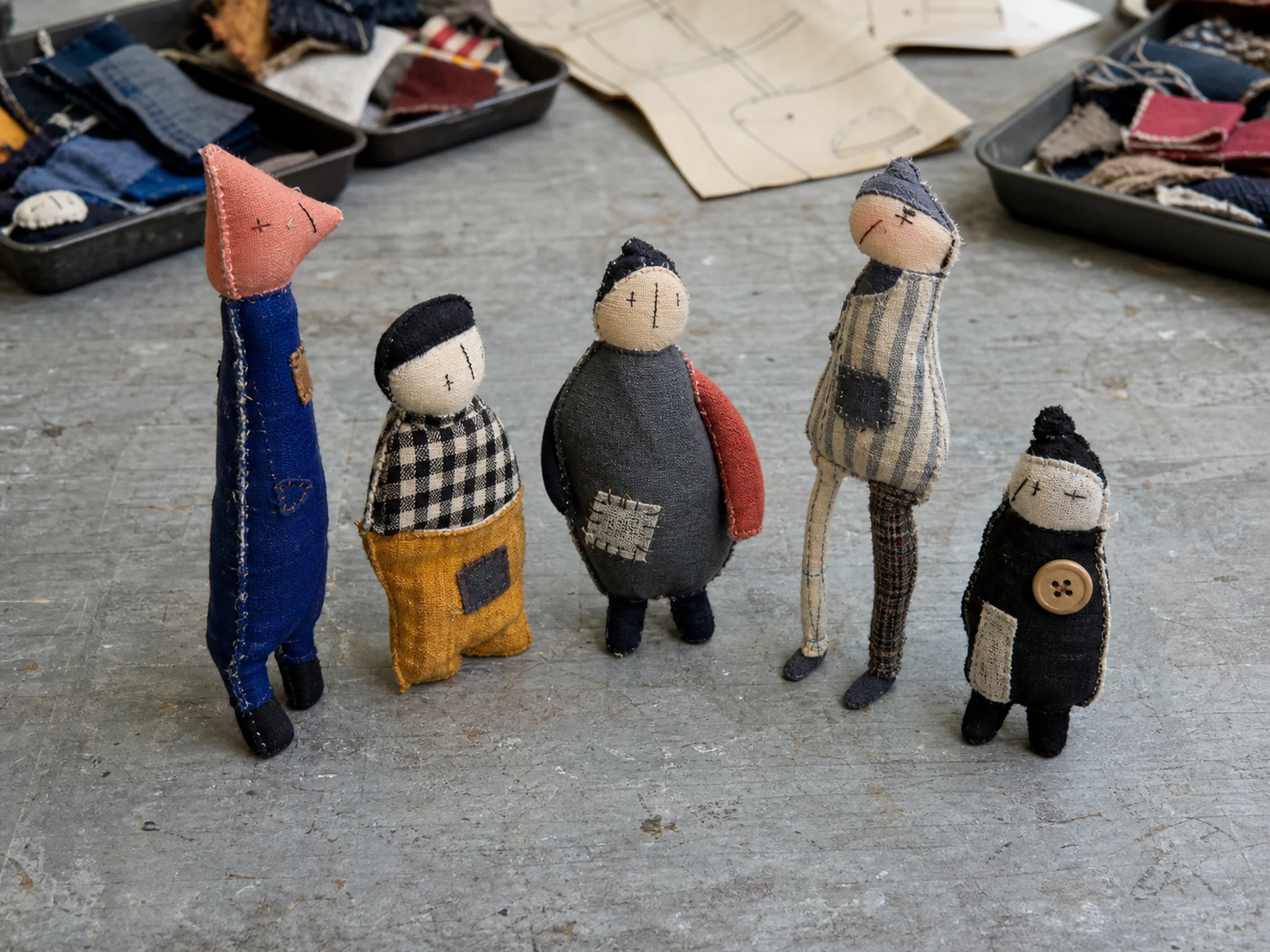
It needs either a useful physical quality or a strong visual interruption. A tiny piece of orange may be enough for one pocket. A worn cuff may already contain the shape of a hat. I keep small pieces in shallow trays by weight rather than color: crisp cotton, heavy weave, stretch, felt, unstable edges.
The danger is keeping everything. Scraps become useful only when they are visible and sorted. Otherwise they are just guilt in a box.
Your seams are often visible. Is that an aesthetic choice?
Partly, but it is also honest construction. A seam tells you how a body was assembled. I like turning some seams outward, adding a second line of thread, or patching an area before the fabric has technically failed. It gives the object a history without pretending it is antique.
I try to distinguish wear as a design language from actual damage. If a collector cannot tell whether something is intentional, the documentation has failed.
How do you avoid making the work feel random?
By limiting the number of active ideas. A figure may have an unusual shape, a strong fabric, and one accessory. If it also has elaborate embroidery, several colors, a detailed face, and complicated joints, everything competes.
I use repetition to calm the work: the same black thread across a group, the same eye spacing, the same coat closure. Surprise needs a stable background.
What role does failure play?
A failed head can become a smaller figure. A body that will not stand may become seated. A badly placed seam can suggest a pocket or patch. But not every failure deserves rescue. Sometimes the most useful action is to cut the piece open and learn from the inside.
“Improvisation is not the absence of standards. It is the ability to recognize a better direction before the original plan becomes expensive.” — Celia Haines
Do you work in editions?
I work in families rather than editions. Five figures might share a scale and construction method, but each uses different material and has a different posture. I would describe them as a series of one-of-a-kind works, not a numbered edition, because the differences are structural rather than cosmetic.
Clear language matters. Collectors should know whether they are buying a unique work, a variation made from a repeated pattern, or a true edition with defined limits.
What should a product page show?
Front, side, back, and a close view of the face and stitching. Scale is essential. A beautiful image without dimensions can make a twelve-centimeter figure look monumental. I also want the listing to say what is inside: filling, wire, weights, and whether accessories can be removed.
Has selling online changed the work?
It has changed photography and scheduling more than design. Online releases create pressure to make a complete “drop,” but not every object wants to be finished on the same date. I prefer a smaller release with clear records and good images.
The archive matters too. Sold work should remain visible with the price and date if the artist is comfortable with that. It allows people to see development instead of encountering only what is currently available.
What are you trying to preserve in the finished object?
The moment when the material stopped being a scrap and started suggesting a character. That is the difficult part to describe, but it is what I want the collector to keep noticing.