Care & Display
Designing a Safe Display for Art Dolls and Handmade Miniature Scenes
The safest art doll display is planned around the object’s materials, supports, environment, and access—not simply the purchase of a case.
By Lena Park
· 9 min read
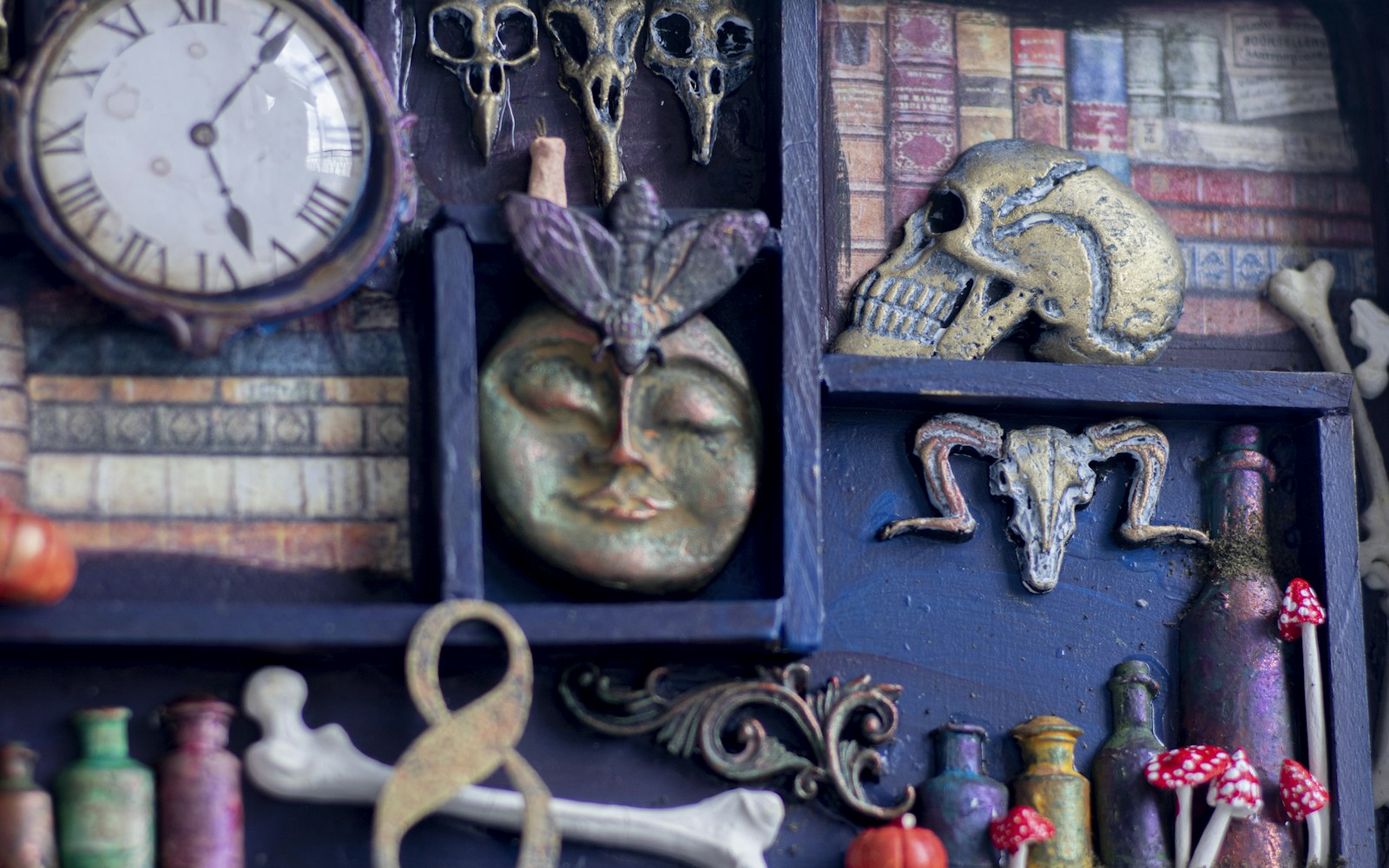
Start with the display decision
Collectors often want to protect fragile dolls and miniature scenes from dust without hiding them away. The safest art doll display balances protection with stable conditions, gentle support, controlled light, and enough access for inspection and cleaning. A case can help, but it is not automatically the safest choice.
Before choosing an enclosure, assess the object and its surroundings. A sealed case may trap dampness, increase heat around a lamp, restrict cleaning, or leave a projecting hat, limb, or accessory pressed against glazing. Start with a short planning checklist:
- What materials are present?
- Which areas are most fragile?
- How much light and heat will the object receive?
- How will dust, condensation, and changing humidity be managed?
- What supports the figure or scene without compressing it?
- Can the display be opened and inspected safely?
- Is the furniture stable, level, and appropriately sized?
Match the display format to the object
No single format is best for every collection. Compare the practical trade-offs before installing the object.
| Format | Advantages | Points to check |
|---|---|---|
| Open shelving | Easy access, good air movement, flexible sizing | Greater exposure to dust, sunlight, household activity, and accidental contact |
| Cabinet | Useful for larger displays and routine access | Stable shelves, safe door clearance, ventilation, and resistance to knocks |
| Shadow box | Suitable for shallow scenes or wall display | Depth, weight, fixing points, viewing angle, and access for inspection |
| Enclosed vitrine | Strong barrier against dust and casual contact | Heat buildup, condensation, cramped proportions, and cleaning access |
Open shelving
Open shelving is straightforward and convenient, particularly when a doll needs frequent inspection or the enclosure would be too cramped. It also avoids some problems associated with poorly designed sealed cases. However, the object remains exposed to airborne dust, strong daylight, pets, passing clothing, and accidental knocks. Shelving should be away from windows, radiators, vents, kitchens, bathrooms, and busy routes through the room.
Cabinets
A cabinet can provide a useful middle ground between access and protection. Choose a level, load-rated unit with shelves that do not flex noticeably under the display’s weight. Doors should open without brushing against costumes, hair, scenery, or tall accessories. If a door closes with force or transmits a knock through the cabinet, the display needs adjustment before the object is placed inside.
Shadow boxes
A shadow box can work well for shallow scenes, wall-mounted compositions, and miniature diorama displays. Measure the deepest projecting element, not merely the body of the main figure. Check the weight of the box, the strength of its fixing points, and the wall surface before installation. Leave enough internal clearance for cleaning and for small changes in position; a scene should not be permanently forced against its glazing or backing.
Enclosed vitrines
An enclosed vitrine offers the strongest physical barrier against dust and casual contact, but enclosure introduces its own responsibilities. Inspect the design for heat accumulation, condensation, restricted access, and awkward cleaning. Do not place a damp object into a closed case, and do not assume that a tightly sealed enclosure is beneficial in every room or season.
A display case can create problems rather than solve them when it seals in moisture, places the figure against the glazing, concentrates light or heat, or makes it impossible to reach loose components safely. Protection is useful only when the enclosure suits the object and can be monitored.
Check materials and scale before installation
Handmade figures are not all equally robust. A scene may combine textiles, felt, paper, painted surfaces, wood, adhesives, wire, hair, and tiny accessories, each with different sensitivities to light, dust, moisture, heat, and handling.
Look closely at:
- felted or woven costumes that can snag or become compressed;
- paper walls, labels, books, foliage, and flooring that may crease, fade, or lift;
- painted faces, props, and scenery that can be marked by rubbing or unsuitable cleaning;
- wood and composite bases that may respond to changing conditions;
- adhesive joins that may loosen or become stressed by heat or movement;
- wire armatures, hair, and fine trim that can catch on doors or cloths;
- miniature crockery, tools, food, and other small accessories that can shift or disappear during cleaning.
Measure from the base to the highest point and from the central figure to every projecting detail. Costumes, limbs, hats, foliage, tools, and scene elements should not touch walls, doors, glazing, shelves, or lighting fixtures. Allow working space for the hand or tool that will eventually clean and inspect the display.
For a handmade kitchen scene or another dense miniature, decide the viewing angle before fixing scenery permanently. A composition that looks clear from the front may be difficult to inspect from above or from the sides. If the scene contains loose parts, photograph their positions before installation.
Control light, heat, dust, and humidity
Place the display away from direct sun and strong temperature changes. Windows, radiators, heating and cooling vents, kitchens, and bathrooms can create unsuitable conditions for some combinations of materials. Reduced light exposure can help limit fading, but it does not eliminate it, and the appropriate level depends on the pigments, textiles, paper, finishes, and construction.
Use lighting that can be controlled in intensity and duration. Position lamps so they do not heat the enclosure or shine directly onto sensitive surfaces. Check the display after changing a bulb, moving a lamp, or adding internal lighting. If the case feels warm or the object shows a new surface change, switch off the light and reassess the arrangement.
Doors and glazing can reduce dust, but they do not remove the need for cleaning. Keep the surrounding area clean and avoid placing the display near activities that generate grease, fibres, or loose debris. At the same time, do not close an object into an enclosure while it is damp or where condensation is likely. Humidity behaviour depends on the construction of the case, the materials, and local conditions, so unusual moisture or material movement warrants advice from the maker or a qualified conservation professional.
A simple monitoring routine can include checking for:
- dust in corners and on horizontal surfaces;
- condensation or a persistent new odour;
- fading, blooming, lifting, cracking, or other surface changes;
- loose parts, shifted scenery, or stretched fibres;
- signs of pests or unexpected material movement.
Support figures without stressing them
Supports should carry the object at strong structural points rather than squeezing a costume, limb, neck, hair, or delicate accessory. A broad, stable support may be less visually discreet than a narrow one, but it can distribute contact more gently. Make supports removable where practical and test the balance before placing the display at height.
Do not assume that an adhesive, pin, wire, or pressure mount is harmless. These methods can stain, puncture, abrade, restrict movement, or react with particular materials. Use them only when the maker or an appropriately qualified conservator has confirmed that the method suits the specific construction.
Separate figures and scene elements enough to prevent rubbing, snagging, and accidental contact during installation or cleaning. In a crowded miniature, secure the base and organise loose components so they cannot shift when a shelf or case is touched. The restraint should prevent movement without trapping, compressing, or permanently altering the object.
Prevent tipping, vibration, and handling accidents
Choose a level, load-rated shelf or plinth and anchor tall furniture where appropriate. Keep the centre of gravity low. Top-heavy figures, tall scenery, and fragile objects should be positioned away from edges, doors, and high-traffic routes.
Vibration can come from doors, speakers, appliances, pets, frequent foot traffic, or nearby furniture and building work. Check the display after moving furniture or carrying out work in the room. If parts have shifted, do not simply push them back into place; inspect for a loosened support or stressed connection first.
Plan the handling route before moving a doll or scene. Clear the destination, open doors in advance, remove obstacles, and use two hands where the object’s construction requires it. Support the base rather than lifting by a roof, costume, limb, handle, or other projecting part.
Build cleaning and inspection into the design
A display is easier to care for when its doors, glazing, shelves, and removable bases can be opened without brushing against the object. Clean the enclosure around the figure first. Do not assume that vacuuming, brushing, or compressed air is safe for felt, paper, paint, hair, loose fibres, or small accessories.
If cleaning the object itself is necessary, pause when the correct method is uncertain. Consult the maker or a suitable conservation professional rather than testing a chemical, adhesive, brush, pin, or tool on a visible area. Material-specific advice matters, particularly when surfaces are painted, flocked, waxed, glued, or assembled from mixed media.
Establish an adaptable inspection routine rather than relying on a fixed universal interval. Record the object’s position, support arrangement, lighting position, and any changes noticed. Photograph the setup from useful angles, including the placement of small components. Documentation makes it easier to restore the scene after cleaning or to identify when a part has moved.
If a part loosens, a surface changes, an odour appears, or pests are suspected, limit further handling and seek advice. Isolating the object from nearby pieces may be sensible while its condition is assessed, but avoid making abrupt environmental changes without appropriate guidance.
Common display mistakes
Buying the case before measuring the object
A case chosen for the figure’s height may not have enough depth for a hat, arm, foliage, or rear scenery. Measure the full composition and include access space.
Treating dust protection as the only goal
A closed case can still expose a doll to heat, light, condensation, or compression. Protection must be considered together with ventilation, inspection, and support.
Using a hidden adhesive for convenience
A quick fix can leave residue, restrict movement, or damage a surface. Ask whether the object can be supported mechanically and reversibly instead.
Making the display too dense
Crowding increases the chance of rubbing and makes cleaning difficult. Scale is not only a visual concern; it determines whether hands, tools, and light can reach the scene safely.
Forgetting the furniture
Even a well-designed vitrine cannot compensate for an unstable shelf, an overloaded cabinet, or a unit placed where doors and foot traffic cause repeated vibration.
Final art doll display checklist
- Materials and vulnerable areas have been identified.
- The enclosure has adequate clearance and suitable ventilation for its setting.
- Direct sun, heat sources, and intense or prolonged lighting are controlled.
- The base and supports prevent compression, tipping, rubbing, and unnecessary vibration.
- Costumes, limbs, hair, scenery, and projecting details do not touch glazing or fixtures.
- Dust protection does not prevent inspection or safe access.
- Loose components are organised and photographed before installation.
- Cleaning tools and a two-handed handling route are planned.
- The shelf, plinth, cabinet, or wall fixing is level and appropriately load-rated.
- The display condition is documented and checked periodically.
- Any unusual change is protected from further handling until assessed.
The best way to display art dolls is to treat the case, shelf, lighting, supports, and room as one system. Choose the least intrusive protection that keeps the object stable, visible, inspectable, and safely supported—and revise the arrangement when the materials or environment show that it needs attention.